
 03-5638-3839
The Role of Photocatalysts in Building Materials and Environmental Applications
Photocatalytic technology has been attracting increasing global attention in recent years. While photocatalysts have already been put into practical use in the fields of building materials and environmental applications, new developments are also emerging in the energy sector. Various market research reports indicate continued growth in the photocatalyst market, particularly in environmental and energy-related applications. In addition, research and demonstration projects related to hydrogen generation and other advanced technologies are progressing, further increasing interest in photocatalytic technology. At present, the most widely established practical applications are in the building materials and environmental fields. Typical uses include antifouling coatings for exterior and interior surfaces, self-cleaning glass, suppression of mold and bacteria, and measures against odors and TVOCs in living environments. Photocatalysts possess the ability to utilize light energy to act on organic substances attached to surfaces, promoting their decomposition, while also exhibiting hydrophilic properties on the treated surface. One of the key differences between photocatalysts and conventional chemicals or temporary treatments is their ability to function continuously on the surface over time.How Far Has Photocatalytic Technology Advanced?
— The Difference Between Practical Applications and Research & Development — Photocatalytic technology has been attracting increasing global attention in recent years. While photocatalysts are already widely utilized in building materials and environmental applications, new applications in the energy sector are also being actively researched and developed. Market research indicates continued growth in the photocatalyst industry, with expanding applications and increasing attention worldwide.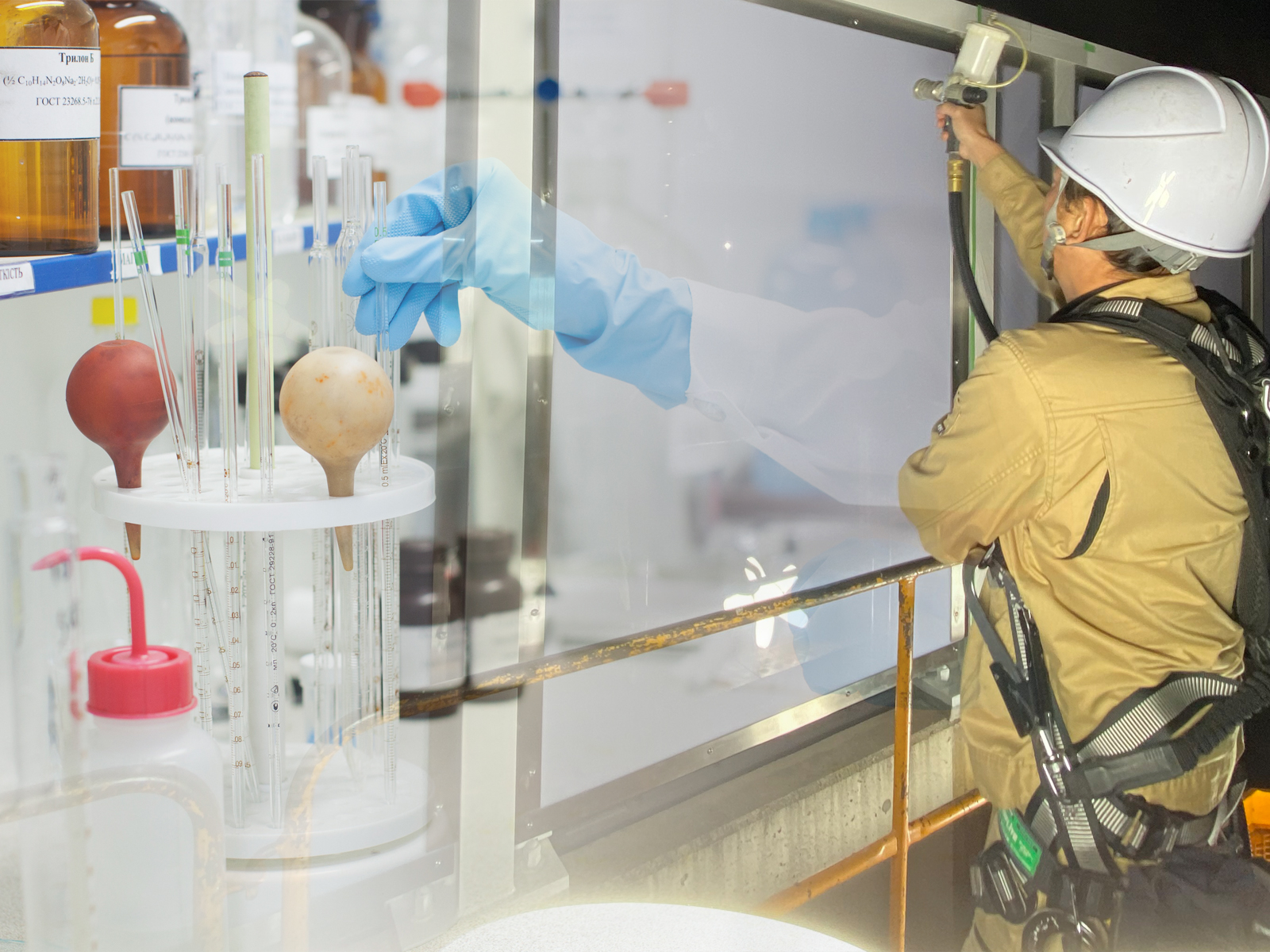
Photocatalysts in Research and Development (Academic Field)
Many of the recent news reports regarding photocatalysts are related to the energy sector. Examples include research into: “technologies for generating hydrogen by splitting water,” “technologies for converting CO₂ into fuel,” and “the practical application of artificial photosynthesis.” In these fields, photocatalysts are treated as “materials capable of generating energy.” Universities and research institutions are actively studying reaction mechanisms and efficiency improvements, with expectations that these technologies may contribute to solving future energy challenges.
Photocatalysts in Practical Applications (Construction and Environmental Fields)
On the other hand, photocatalysts are already widely used in practical applications within the building materials and environmental sectors. Typical applications include:- Antifouling protection for exterior and interior surfaces
- Suppression of mold and bacteria
- Maintenance and improvement of living environments
In these applications, photocatalysts are utilized as “surface functional coating technologies.” Rather than generating energy, they work by acting on organic substances attached to surfaces and helping maintain cleaner and more comfortable environments.

Even Within Photocatalysis, the “Roles” Differ
Although the term “photocatalyst” is the same, its role differs significantly depending on the field. In research and development, photocatalysts are viewed as “energy conversion materials,” while in practical applications they are treated as “surface functional coatings.” As a result, the intended purposes and evaluation criteria differ considerably. For this reason, interpreting practical applications solely based on research news or academic developments can sometimes lead to misunderstandings regarding real-world usage.The Positioning of PALCCOAT
At PALCCOAT, we position photocatalysts as “surface technologies that provide continuous functionality.” In actual applications, proper design and installation are essential depending on factors such as: “the target material,” “the usage environment,” and “the performance that needs to be maintained.”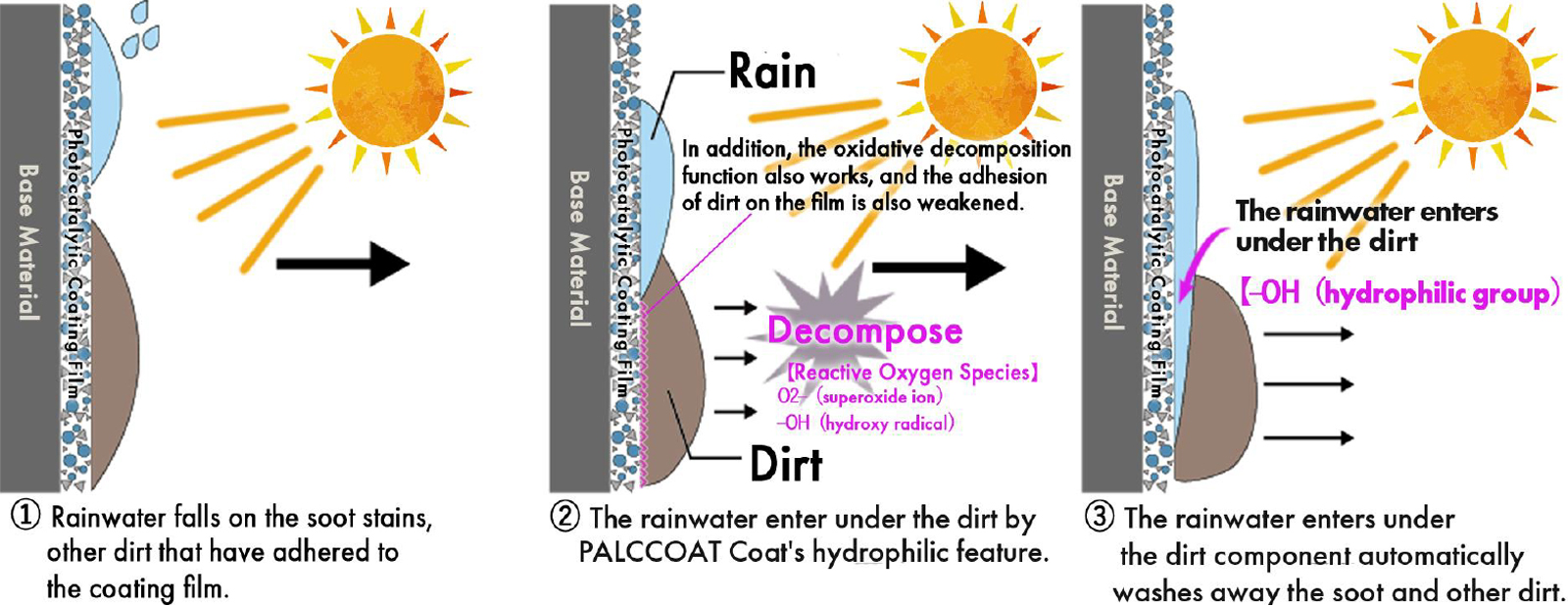
For the Proper Utilization of Photocatalysts
Today, photocatalytic technology continues to evolve as an energy-related technology in the research field, while becoming increasingly established as an environmental improvement technology in practical applications. Because the role of photocatalysts differs depending on the field, proper understanding and application according to the intended purpose are essential.■ Consultation & Inquiries
The optimal approach for introducing photocatalytic technology varies depending on the application and environment. At PALCCOAT, we provide proposals tailored to actual site conditions and project requirements. If you have any questions regarding our products or coating applications, please feel free to contact us.
Contact PALCCOAT