
 03-5638-3839
Hydrogen Production Through Artificial Photosynthesis – Demonstration Testing Planned for This Summer
In recent years, the term “artificial photosynthesis” has been appearing more frequently in both research and media coverage.According to reports published in April 2026 regarding hydrogen production through artificial photosynthesis, a research group led by Professor Kazunari Domen, Distinguished Specially Appointed Professor at Shinshu University, is planning to begin demonstration testing this summer for hydrogen production using artificial photosynthesis. Artificial photosynthesis is a technology that uses sunlight energy, similar to natural plant photosynthesis, to generate energy from water and CO₂.
※Quoted from an article published in The Nikkei on April 21, 2026.
Related Research: Shinshu University – Photocatalysis Research
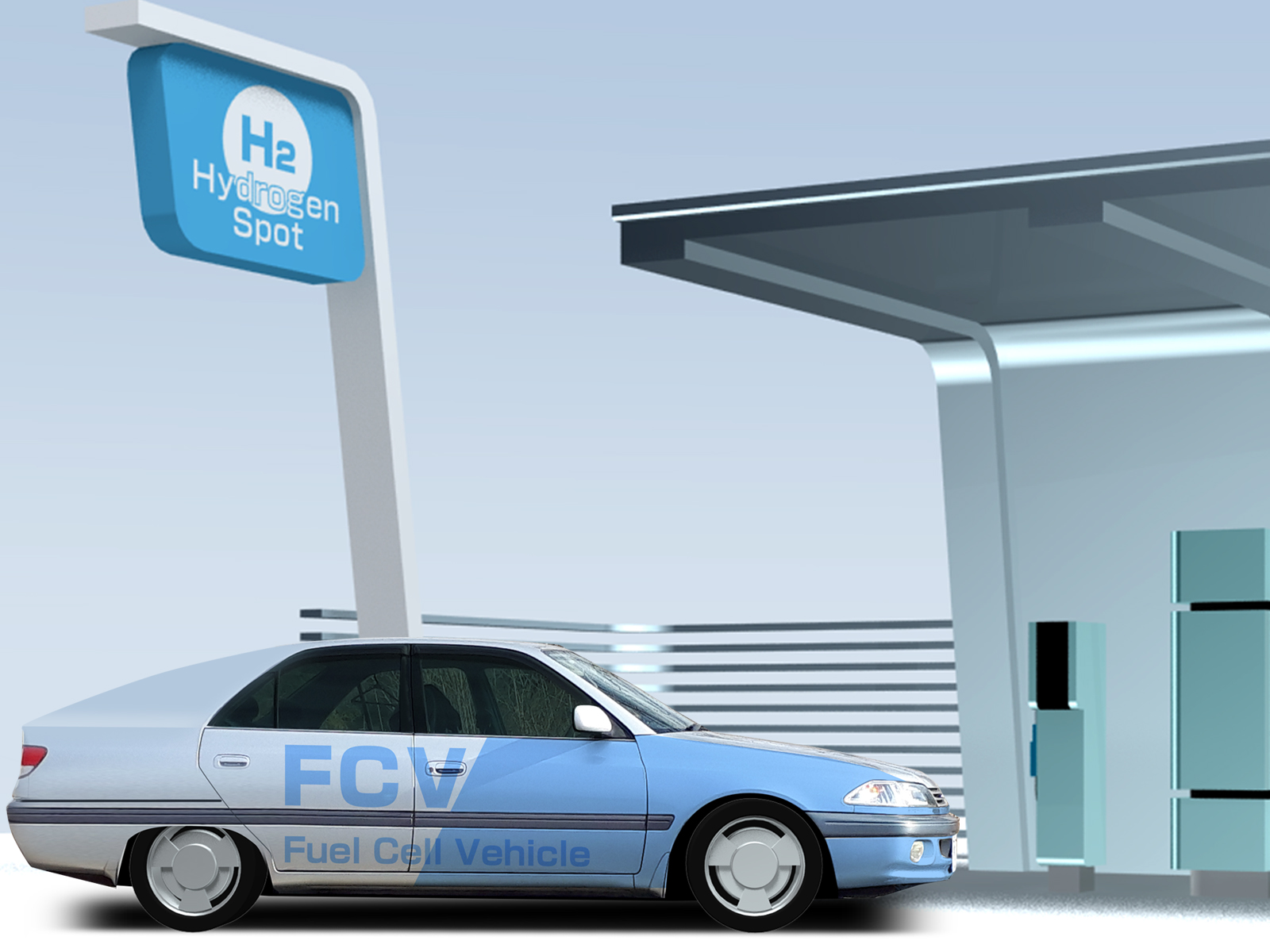
Research That Could Represent the “Future Form” of Photocatalyst Technology
At the core of artificial photosynthesis lies photocatalyst technology. Research is progressing on technologies that use light to promote chemical reactions, including splitting water to generate hydrogen and utilizing CO₂ as a resource. Currently, major challenges include energy conversion efficiency, durability, scalability, and cost. However, the recent report highlighted the move toward outdoor demonstration testing as a significant step forward.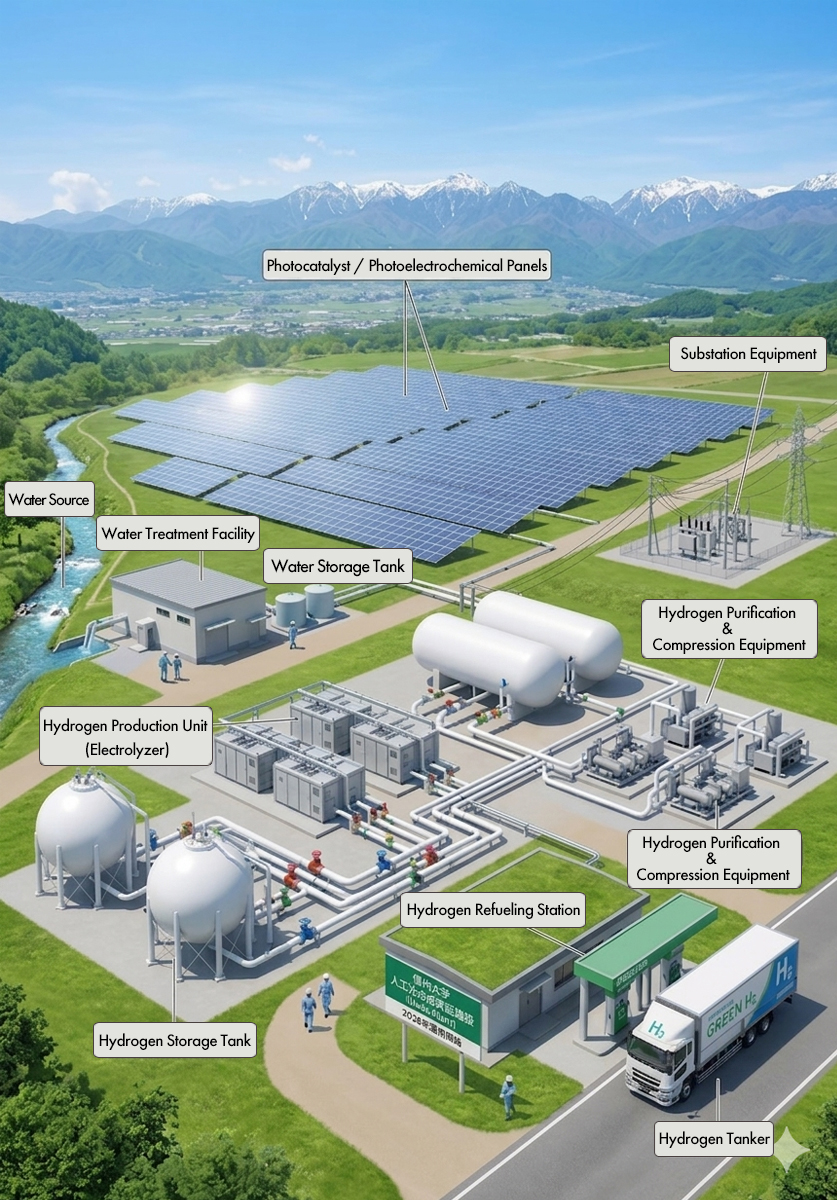
*This illustration was created based on the Nikkei article as an image of a future hydrogen production facility using artificial photosynthesis technology.
Meanwhile, Photocatalyst Technology Is Already Used in Real-World Applications
Photocatalyst technology is sometimes viewed as a “future technology.” In reality, however, photocatalysts have already been commercialized and widely utilized in the construction and environmental fields. Examples include self-cleaning coatings for exterior walls and glass, anti-fouling and anti-mold applications, indoor air quality improvement measures (such as odor and TVOC reduction), and the decomposition of organic substances in real buildings and indoor environments.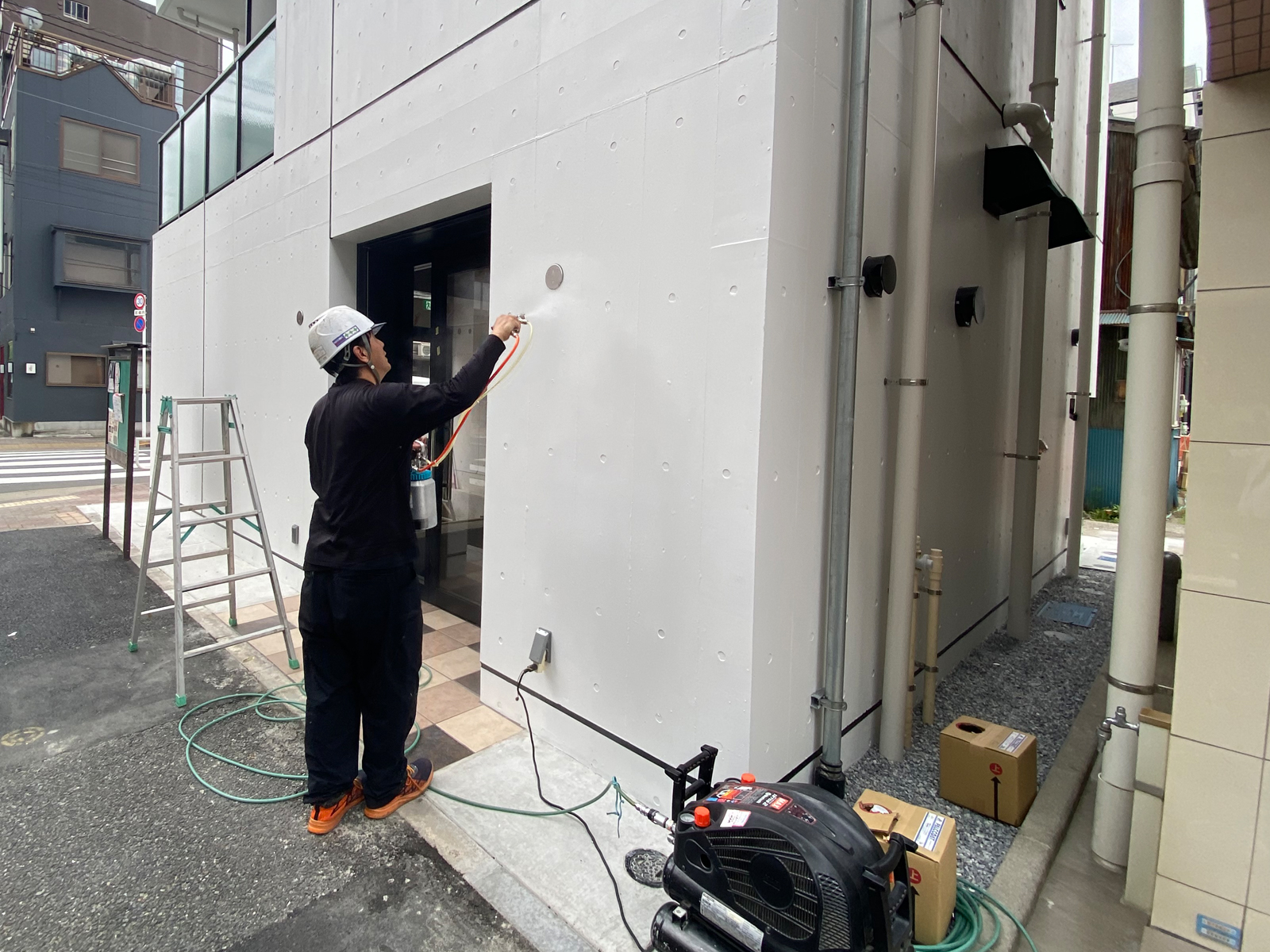
Research and Real-World Environments Require Different Perspectives
As a company involved in the manufacturing and application of photocatalyst solutions, we are also highly interested in advancements within academic research.Academic research often focuses on achieving higher conversion efficiency and developing new reaction systems.
In actual application environments, however, many other factors become equally important, such as lighting conditions, compatibility with substrate materials, durability, maintenance performance, safety, and long-term stability under real-world conditions.
In other words, “demonstrating a reaction” and “maintaining performance over the long term in real environments” are not necessarily the same thing. We believe that continuously considering how photocatalyst technology performs in actual environments is an important aspect of the field.

Mold Problems Around Windows: Photocatalyst coating solutions for mold-prone window frames affected by condensation.

Protecting Walls in Low-Light Areas: Suitable for mold prevention on walls with limited sunlight exposure and hard-to-reach areas.
Both Research and Practical Implementation Are Important for Photocatalyst Technology
In real-world usage environments,- Lighting conditions (including sunlight exposure duration and wavelength types such as visible light)
- Usage environment
- Substrate materials
- Types of pollutants
Artificial photosynthesis is a highly promising research field that could further expand the possibilities of photocatalyst technology. At the same time, current photocatalyst technologies are already being utilized in society as environmental improvement technologies. Today’s photocatalyst technologies already provide sufficient stability and durability under appropriate conditions, and many have progressed into practical real-world implementation. In particular, titanium dioxide-based photocatalysts are widely used in construction materials that utilize self-cleaning and hydrophilic properties.
Meanwhile, expanding stable performance across a wider range of environmental conditions — such as low-light environments and varying rain exposure conditions — is expected to become increasingly important in future material design and application technologies.
The continued accumulation of both research and practical implementation may become one of the key factors supporting the future development of photocatalyst technology.
■ Contact & Consultation
The optimal approach for photocatalyst implementation varies depending on the intended application and environmental conditions. PALCCOAT provides proposals tailored to specific site conditions and usage environments. If you have any questions regarding our products or application services, please feel free to contact us. Contact PALCCOAT