
 03-5638-3839
— Research Trends in the Academic Field and Perspectives Required in Real-World Environments —
In recent years, particularly in the fields of architecture and environmental engineering, interest in Indoor Air Quality (IAQ) has been growing worldwide.
While energy efficiency, airtightness, and high insulation performance in buildings have advanced, chemical substances and volatile organic compounds (VOCs) that accumulate indoors are once again being recognized as potential health risks.
The Core of IAQ Research: “Ventilation + Materials + Chemical Substances”
In academic IAQ research, rather than relying on a single countermeasure,
- ●Ventilation design
- ●Emissions from building and interior materials
- ●Chemical reactions occurring indoors
a comprehensive and integrated perspective has become the mainstream approach.

Particular attention is being paid to substances such as:
- ●Formaldehyde
- ●TVOC (Total Volatile Organic Compounds)
which are known to pose risks even at low concentrations when exposure occurs over long periods.
Photocatalysts in IAQ Research as a “Complementary Technology”
Within the IAQ research field, photocatalysts are not treated as a “universal air purification solution,” but are instead positioned as:
- ●A supplementary measure that assumes proper ventilation
- ●A surface-based reaction control technology for building materials
This perspective is widely accepted in academic discussions.
Recent studies have focused on:
- ●Reactivity under low-light indoor conditions
- ●Durability and longevity of photocatalytic coatings formed on surfaces
- ●The presence or absence of by-products
These aspects are being examined in greater detail.
Academic Clarification of the Term “Decomposition”
Even in IAQ research, photocatalytic reactions are not regarded as simple “decomposition,” but rather as a continuous series of oxidation reactions.
As a result, careful discussion is given to:
- ●Intermediate products generated during the reaction process
- ●The potential for re-emission within indoor spaces
For this reason, avoiding overly simplified expressions of photocatalytic effects is considered important from an academic standpoint.
“Durability” and “Management” in Indoor Environments
In the IAQ field, greater emphasis is placed on long-term performance rather than short-term effects, including:
- ●Whether performance can be maintained over extended periods
- ●Deactivation caused by the accumulation of indoor pollutants
- ●The relationship with cleaning and maintenance practices
Such operational and management perspectives are considered essential.
The lifespan and effectiveness of photocatalytic coatings vary depending on usage conditions and the surrounding indoor environment, making it difficult to define them with a single uniform value.
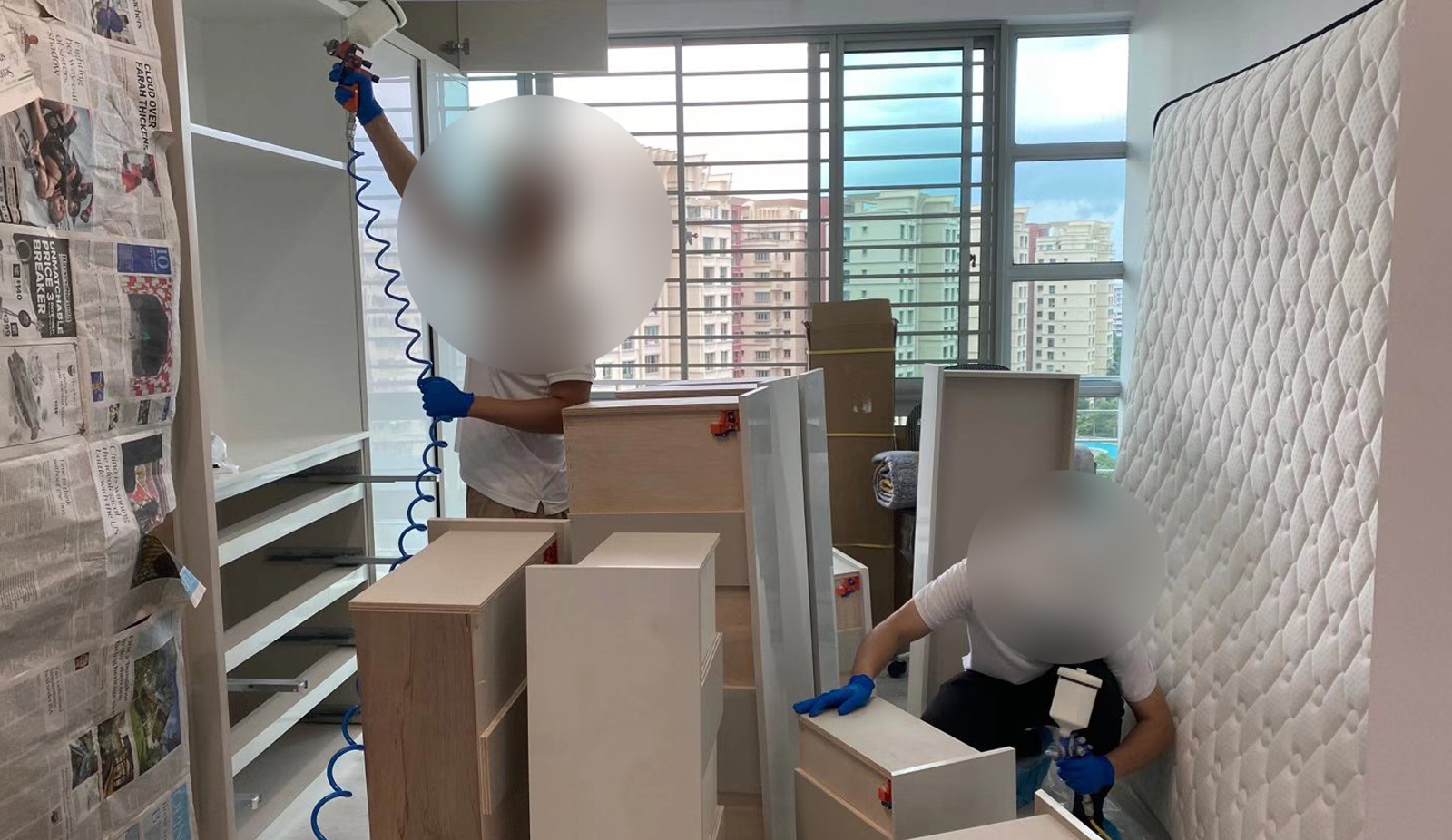 [Above image: Sick house countermeasures using PALCCOAT VLAG coating]
Approaches to Performance Evaluation and Measurement
In IAQ research, it is pointed out that evaluations should clearly distinguish between:
- ●Laboratory-based testing
- ●Measurements conducted in actual living environments
This distinction is considered essential.
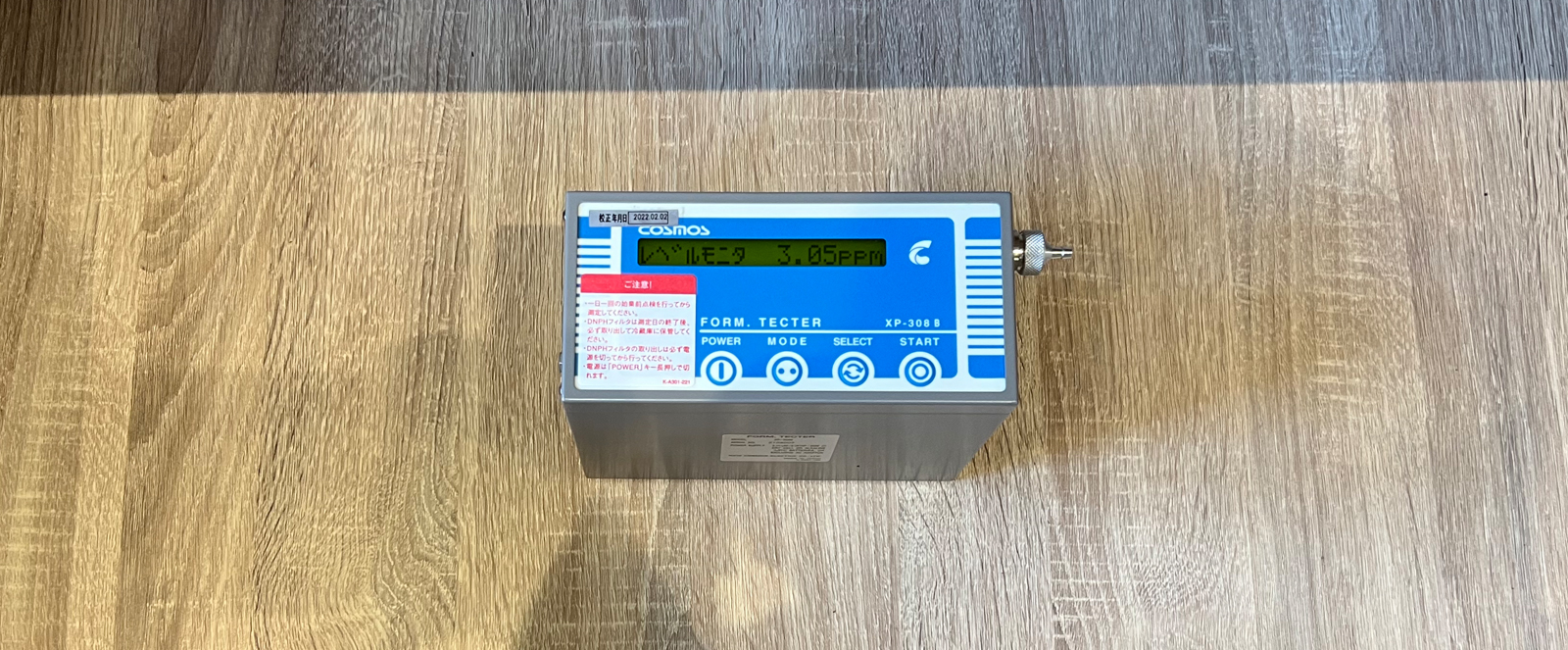
In real-world environments, numerous factors influence results, including:
- ●Temperature and humidity
- ●Ventilation frequency
- ●Human occupancy and movement
Therefore, careful interpretation of measurement results is required.
PALCCOAT’s Perspective on IAQ
When applying photocatalytic technology as an IAQ countermeasure, PALCCOAT adheres to the following principles:
- ●Considering the overall design of the indoor environment as a prerequisite
- ●Positioning photocatalysts as a complementary technology
- ●Avoiding excessive emphasis or exaggeration of measurement results
These principles form the foundation of our approach.
Improving indoor air quality is not an issue that can be resolved by a single technology alone; it should be addressed as a challenge that requires the combination of multiple elements.
PALCCOAT will continue to share information that bridges academic knowledge with real-world application, construction, and operational practices related to IAQ.
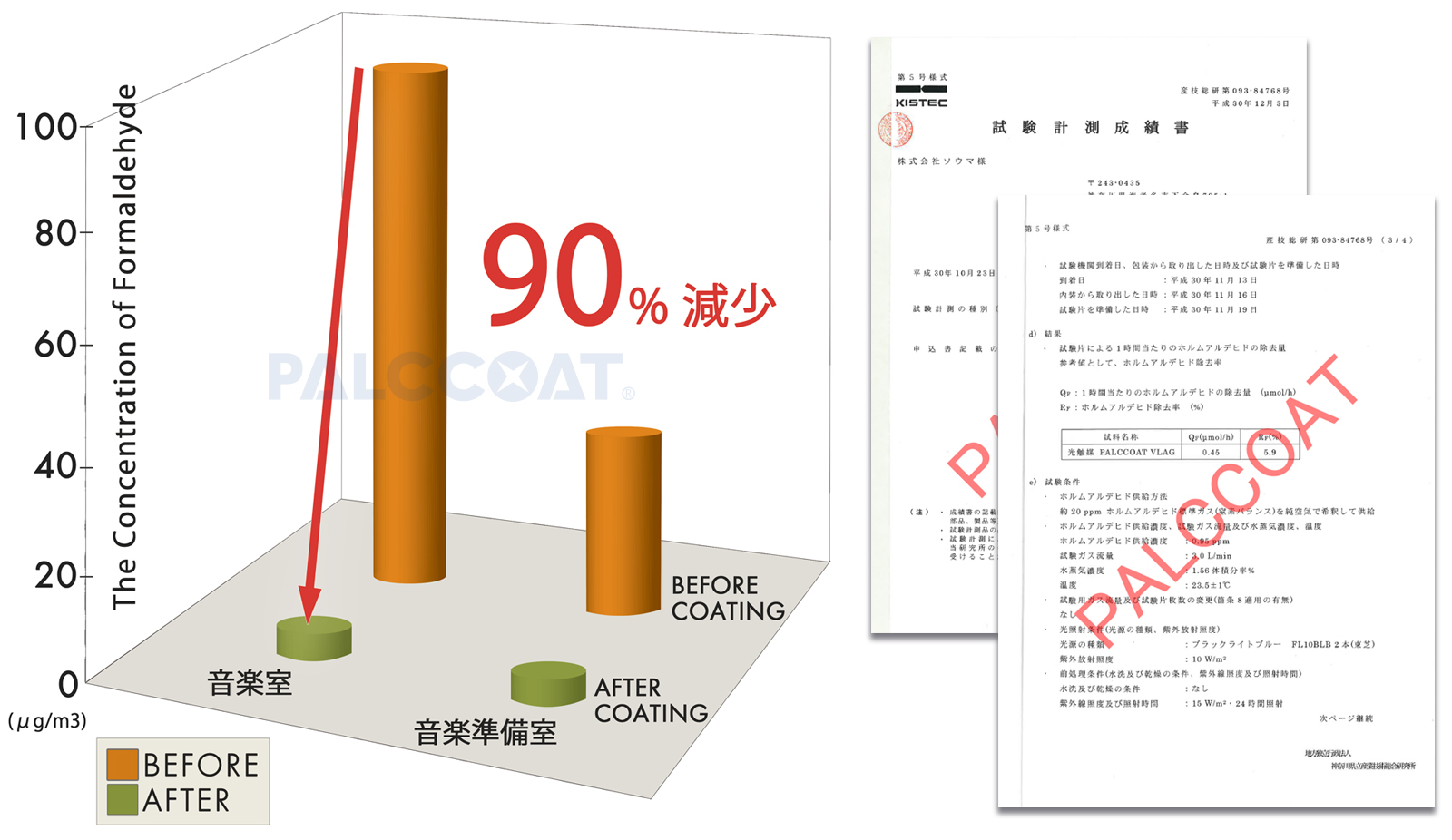 [Left graph: Formaldehyde air purification performance of PALCCOAT under real-environment conditions (JIS test)]
For detailed specifications of PALCCOAT or inquiries regarding implementation, please feel free to contact us using the form below.
Contact form